Unveiling the Secrets of Redispersible Polymer Powder Film Formation: Understanding How Particles Transform into Continuous Films in 3 Stages!
In building materials like dry-mix mortar, tile adhesive, and putty, redispersible latex powder acts like an invisible glue—making the materials adhere more firmly and more flexible when exposed to water. But did you know? Its core ability, film formation, isn't simply a matter of drying in the sun; it involves a delicate microscopic process of particle dispersion and fusion. Today, we'll break down the film-forming mechanism step by step and explain the magic of latex powder's transformation.
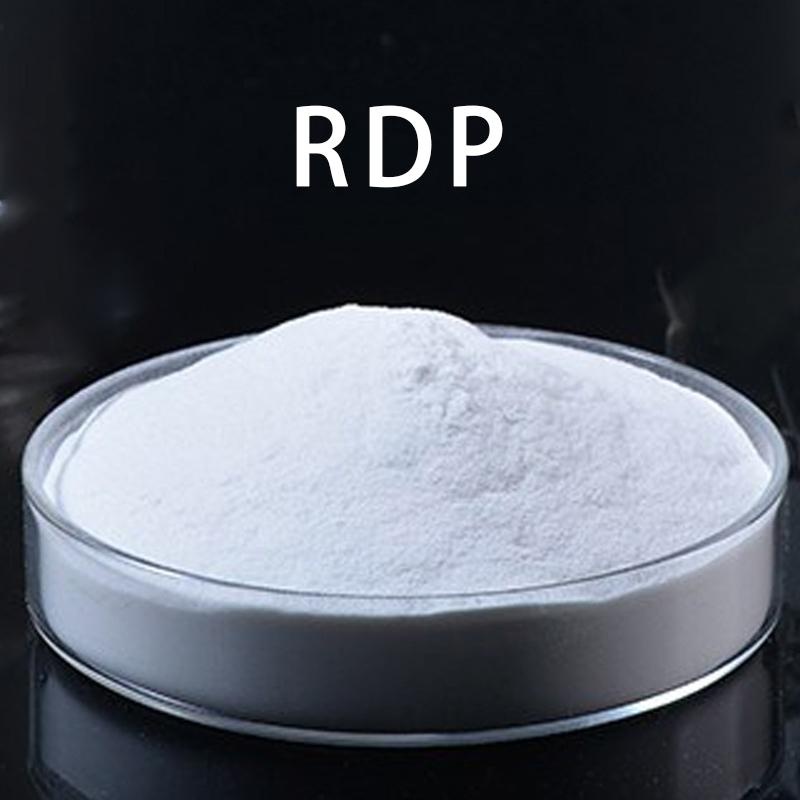
Ⅰ - The "starting point" of film formation: first understand the "initial state" of latex powder
Ⅱ - 3 stages of film formation: details of the transformation from "particles" to "film"
Stage 1: Particle "awakening" and dispersion (first step upon contact with water)
When latex powder is added to water, the first thing that happens is "protective colloid dissolution": the outer layer of polyvinyl alcohol slowly dissolves upon contact with water, like peeling off a protective coat, allowing the polymer particles within to "awaken."
At this point, with sufficient stirring, these tiny polymer particles will be evenly dispersed in the water, forming a milky white latex liquid. Much like a dry sponge stretching after absorbing water, each particle can move freely and avoid clinging to one another.
The pitfalls of this step are: insufficient stirring or low water temperature (e.g., below 5°C) will slow the dissolution of the protective colloid, causing the particles to clump together and form "lumps." These lumps cannot be dispersed, ultimately leaving "white spots" on the membrane and even causing discontinuities.
Stage 2: Particle "Line-Up" and Deformation (Critical Moisture Evaporation Period)
When latex is applied to a building material surface (for example, tile adhesive applied to the back of a tile), the water slowly evaporates—this is the critical turning point in film formation.
As the water content decreases, the previously freely moving polymer particles are "squeezed together." Much like people slowly gathering in a playground, the particles are tightly packed along the substrate surface, forming a "particle layer."
When only 10%-20% of the water content evaporates, capillary tension between the particles begins to exert force. This tension acts like an invisible "hand," pressing adjacent particles toward each other, transforming spherical particles into oblate ones. The gaps between the particles gradually shrink, gradually forming the "prototype of a membrane."
The "fatal problem" of this step: if the water evaporates too quickly (such as in high temperature, strong winds), the surface of the latex will first dry into a "hard shell", and the water inside cannot be discharged, which will form bubbles, pinholes, or even direct cracks in the membrane; if the evaporation is too slow (such as in high humidity and rainy weather), the particles will slowly settle, resulting in uneven density between the upper and lower layers of the membrane, with the bottom layer being brittle and the upper layer being sticky.
Stage 3: Molecular "Hand-in" and Film Formation (Final Fusion and Fixation)
Once the particles have deformed to a complete fit, the crucial process of "molecular diffusion" begins: the molecules within each polymer particle gradually "move" toward the molecules of adjacent particles, much like two dough balls pressed together, the flour molecules within interpenetrating and eventually fusing into one.
This process continues for several hours to a day (depending on the ambient temperature) until the molecules of all particles have successfully "joined hands." The previously dispersed particles become a continuous, dense film—one that firmly "grips" onto the building material substrate (such as tiles and wall coverings) and resists stretching like an elastic membrane, reducing the risk of cracking.
The key requirement for this step: adequate temperature! If the ambient temperature is too low, molecular movement slows. Even if the particles are tightly attached, the molecules will struggle to "join hands," ultimately forming a "pseudo-film"—one that appears to be a film but breaks apart when stretched, lacking any cohesive strength.